


GREEK HERITAGE · THE JOURNAL
The Meaning of Greek Key Jewelry
Discover the history behind ancient Greek coin jewelry and the symbols that inspired modern Greek coin necklaces, pendants and earrings.
Greek Roots | Athens, Greece
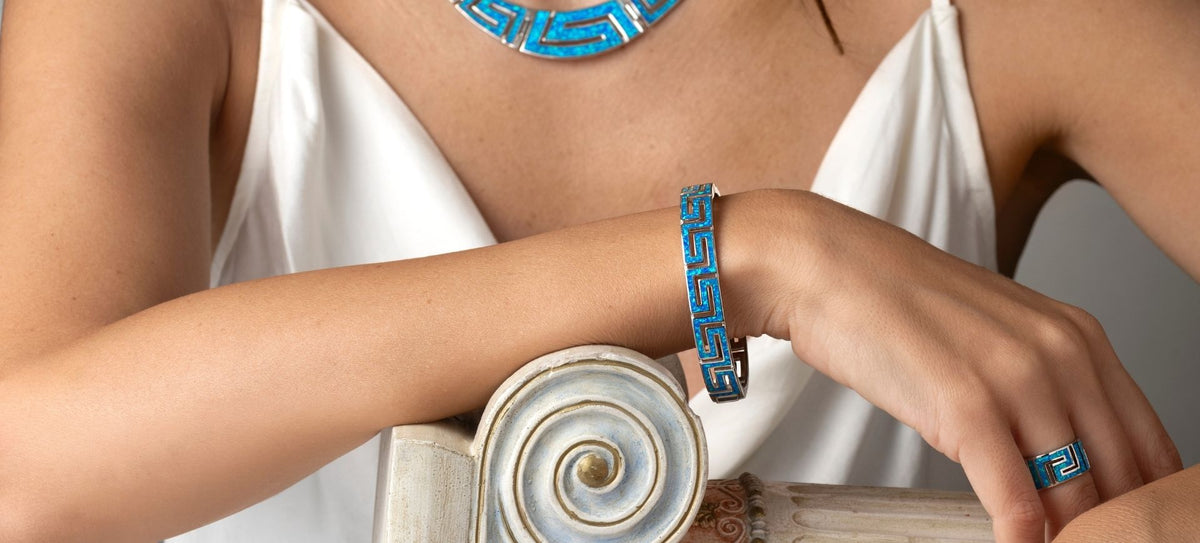
The Greek Key, also known as the Greek meander or meandros, is one of the most recognizable decorative motifs associated with Greek culture.
Made up of a continuous geometric line that turns back on itself, the design has appeared in Greek art and decoration for centuries. Today, the Greek Key remains one of the most popular symbols in Greek-inspired jewelry, from necklaces and bracelets to rings and earrings.
But what does the Greek Key actually mean?
What Is the Greek Key?
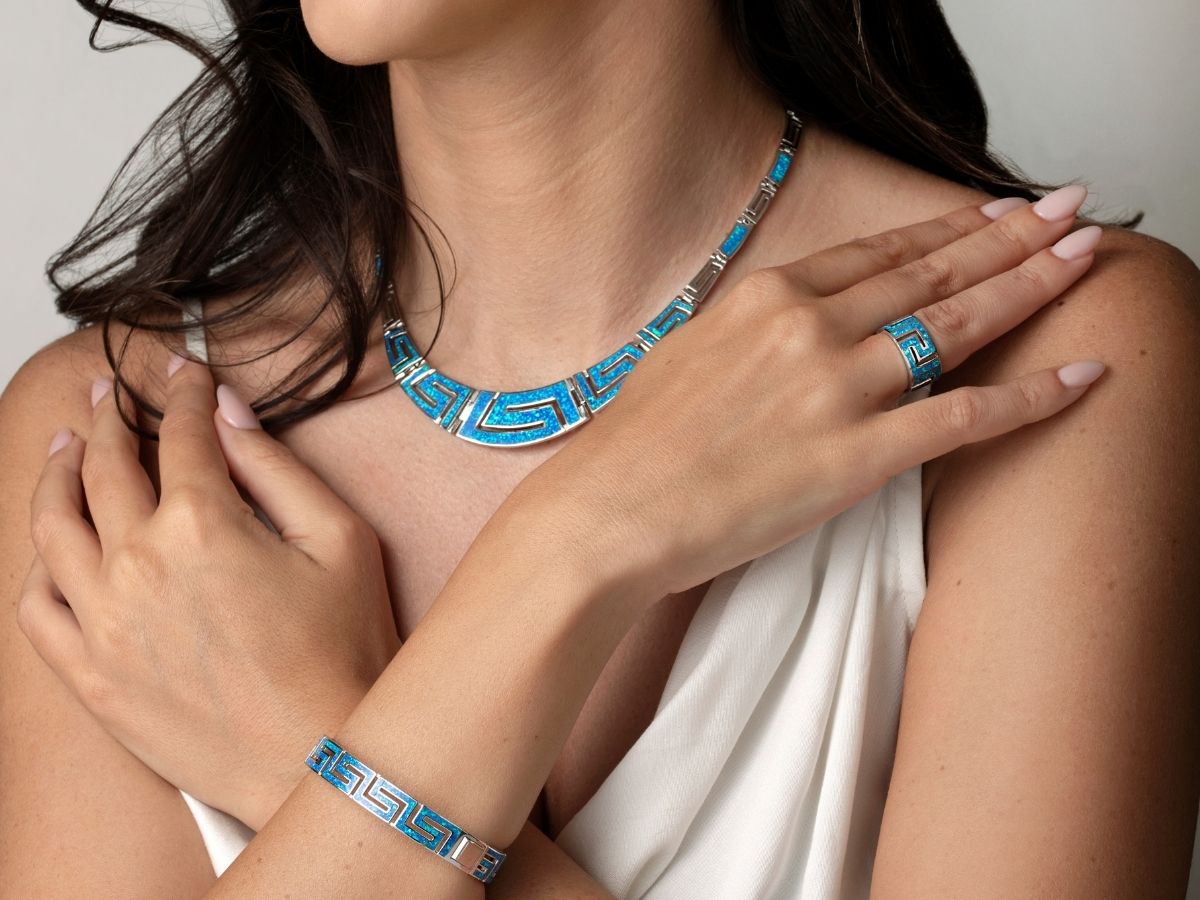
The Greek Key is a geometric pattern formed by a continuous line arranged in repeated right-angle turns.
The motif is commonly called the meander, a name traditionally associated with the winding course of the ancient Maeander River in Asia Minor.
Although the exact symbolic meaning of the motif is not universally established in ancient sources, its continuous, unbroken form has become strongly associated in modern Greek culture with ideas such as continuity, eternity, unity, and the endless journey of life.
This is one reason the symbol has remained so popular in jewelry.
The History of the Greek Meander
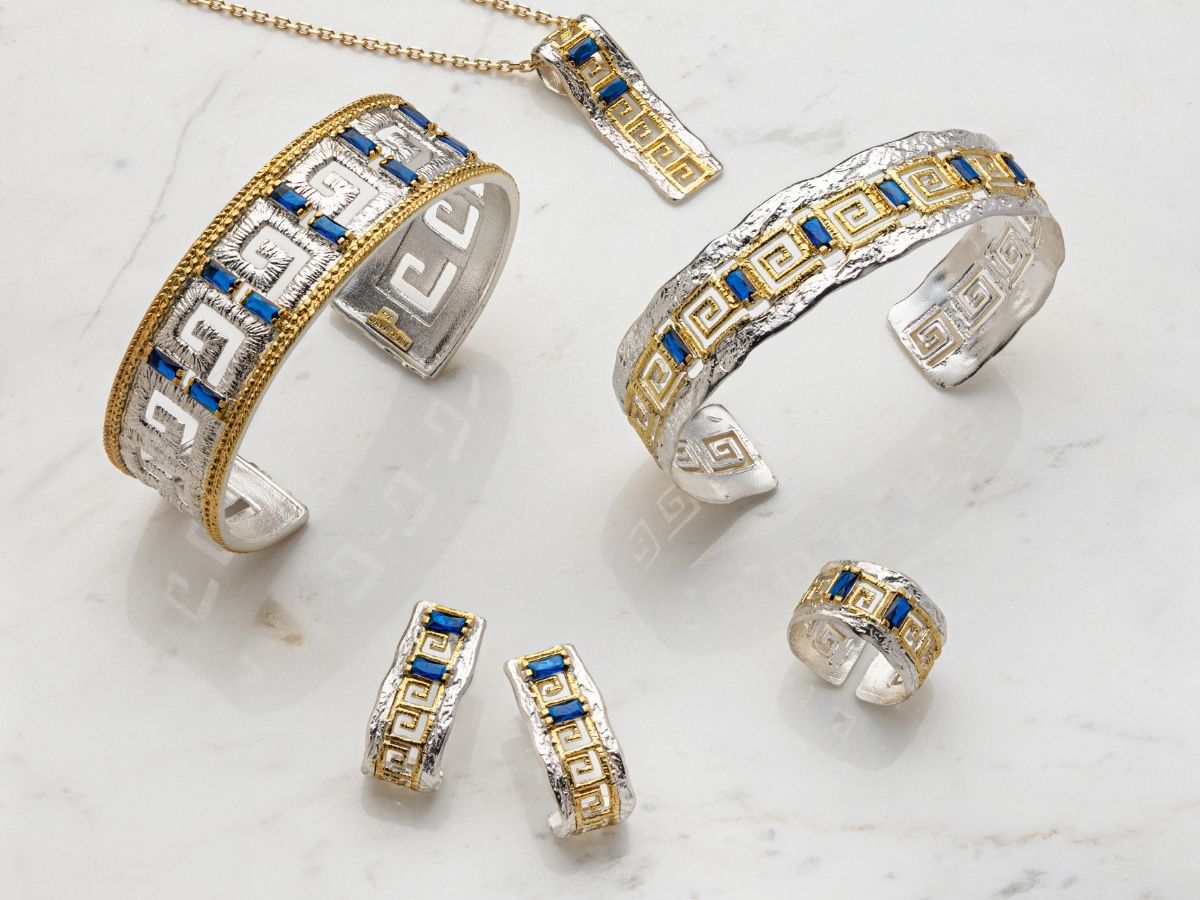
Geometric patterns similar to the Greek Key appeared in ancient Greek decorative art, including pottery, architectural decoration, mosaics, and other forms of ornament.
The motif became particularly recognizable through Greek art and architecture, where repeated geometric patterns were used to create rhythm, balance, and visual continuity.
The Greek Key is therefore more than a decorative pattern. For many people today, it represents a visual connection to the artistic heritage of ancient Greece.
What Does the Greek Key Symbolize?
There is no single universally documented ancient interpretation of the Greek Key.
However, the continuous nature of the design has led to several widely used modern interpretations.
Continuity
The line of the Greek Key appears to continue without a clear beginning or end.
For this reason, the design is often associated with continuity and the idea of an ongoing journey.
Eternity
Its repeating pattern can also represent something enduring and timeless.
This makes the motif particularly meaningful when used in jewelry intended to commemorate a relationship, a journey, or a connection to Greek heritage.
Unity
The interconnected lines of the design can symbolize connection and unity.
For jewelry, this can make the Greek Key a meaningful choice for gifts between family members, partners, or friends.
Why Is Greek Key Jewelry So Popular?
One of the reasons the Greek Key has remained popular is its versatility.
Its geometric structure works naturally with both traditional and contemporary jewelry designs.
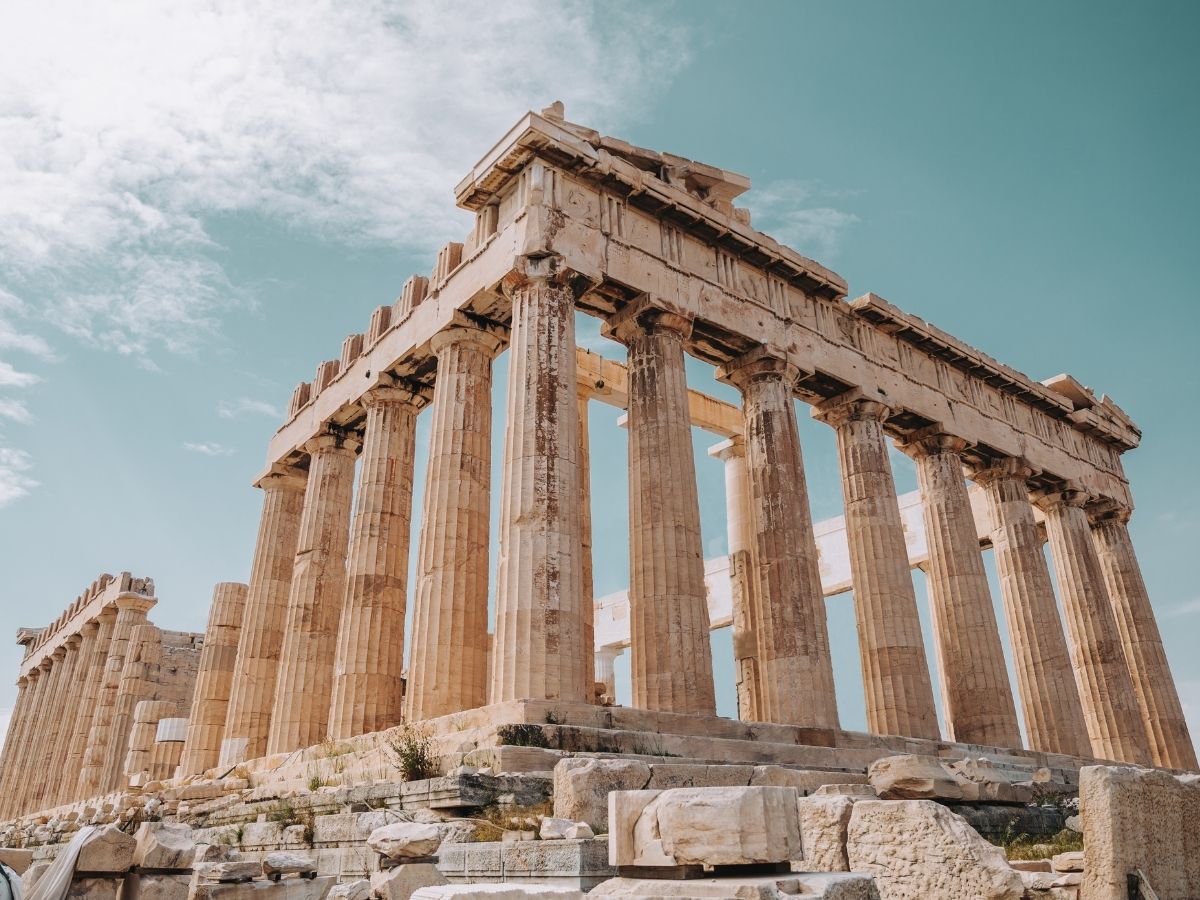
A Greek Key necklace can be subtle and minimalist, while a larger Greek Key bracelet can make the motif the central feature of the piece.
The design also works beautifully in both sterling silver and gold, making it suitable for different styles and occasions.
Greek Key Jewelry as a Meaningful Gift
Greek Key jewelry can be especially meaningful for someone with a connection to Greece.
It can commemorate:
- A trip to Greece or Athens
- Greek family heritage
- A wedding or anniversary
- A friendship
- A special milestone
- A love of Greek history and culture
For someone who has visited Greece, a Greek Key necklace or ring can become a lasting reminder of the country.
Greek Key Jewelry at Greek Roots
At Greek Roots in Athens, the Greek Key is part of a wider collection of jewelry inspired by Greek history, art, and cultural heritage.
From sterling silver pieces to gold designs, Greek Key jewelry offers a way to carry a small piece of Greek-inspired design wherever you go.
Explore our Greek Key jewelry collection and discover a design inspired by one of Greece's most recognizable motifs.
Featured Greek Key Jewelry


Frequently Asked Questions
The Greek Key is commonly associated today with continuity, eternity, unity, and the ongoing journey of life. These interpretations are connected to the motif's continuous geometric form.
The meander motif appears extensively in ancient Greek art and decoration. However, specific modern interpretations of its symbolism should not automatically be attributed to ancient Greek beliefs.
The design is commonly called the Greek meander or meandros.
Yes. Its connection with Greek culture and its associations with continuity and heritage make it a meaningful gift for people who love Greece, Greek history, or Greek design.
Related Collections
Explore more Greek-inspired jewelry and find a piece with a story behind it.


